
By Moira Ritter
January 7, 2026 7:38 AM ET
At 44, Rebecca Zandovskis has only ever felt at home once in her life: in the Altadena house she purchased with her husband in 2019.
“The house that I bought in Altadena was the house I planned on staying at until I couldn’t stay there anymore, literally,” Zandovskis told Homes.com.
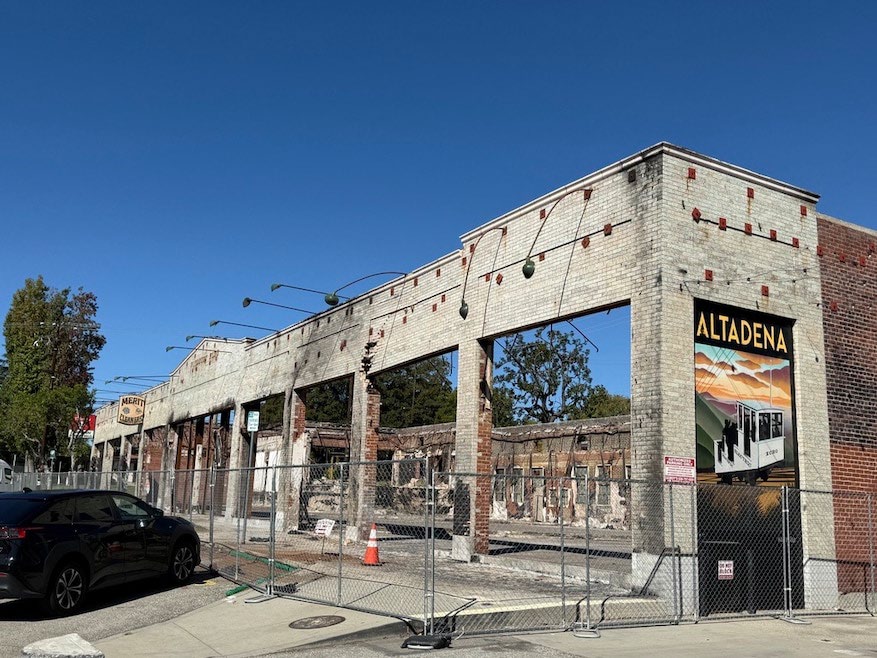
That end came sooner than expected, when the historic Eaton Fire broke out in Altadena on Jan. 7, 2025. It destroyed 5,600 single-family houses, 261 multifamily units, 161,000 square feet of retail space and 38,000 square feet of offices, according to officials and data from CoStar, Homes.com’s commercial real estate affiliate.
As the first anniversary of the disaster arrives, the neighborhood’s recovery is well underway. As of Jan. 5, Los Angeles County reported that four single-family rebuild projects had been completed. An additional three accessory dwelling units were reported as completed. Another roughly 500 residential projects were in some stage of the rebuild process, from the pre-construction phase to final inspection, according to the county.
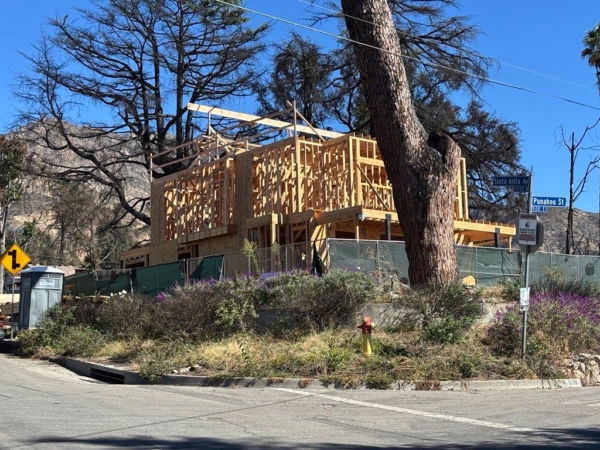
Locals say much of that rebuilding progress is thanks to a growing group of grassroots organizations and collaborations.
Take Zandovskis, for example. After two decades in the property management and human resources industries, she joined Genesis Builders as senior director of business development in the aftermath of the fire.
Even Genesis itself — a collaboration between Southern California builders Cityview and Montage Development — was a response to the fire. The firm offers a start-to-finish rebuilding plan for displaced residents. Clients work with the developer to select from a catalog of pre-approved design and planning options and are guaranteed a 12-month delivery for their new home.
“When Genesis was formed, the opportunity kind of arose to be somebody who can help build my community back and help other neighbors go through the same things that I’m going through,” Zandovskis said.
‘This is my trauma response’
For 24 days, the Eaton Fire raged through Altadena and the surrounding areas, burning more than 14,000 acres in the foothills of Los Angeles. In all, more than 6,700 units were destroyed.
“The thought of [our homes] ever catching fire never crossed one of our minds, because there is no way the fire could get there. It would have to go through thousands and thousands of homes,” Zandovskis said. “And sadly, it did.”
It’s a common sentiment among residents. Almost as common is the community’s response to that shock.
For David Ly, an Altadenan and veteran general contractor, getting involved in the rebuild was a way to move forward. So, he established Rebuild Altadena, a post-fire recovery and rebuilding firm.
“This is my trauma response,” he told Homes.com.
So far, the team has taken on about 35 rebuild clients. One of those projects is already well on its way to completion; as of Dec. 17, it was framed with plumbing and electrical, and the team planned to have drywall up before the new year. Two other projects have received county approval.

The key to rebuilding, according to Ly, has been leveraging the trust that is naturally borne between neighbors. In fact, the Rebuild Altadena website even highlights the brand’s grassroots foundation.
“We’ve been where you are. Unsure where to start? Let’s talk. We’re not just builders — we’re neighbors, here to guide you home,” the site reads.
There are less organized initiatives, too.
“A lot of us in Altadena have learned how to move forward from other people doing it first,” Zandovskis said. “Like, ‘Oh, you talked to the insurance company? What did you learn?’ Because this is new to everybody. Things are constantly changing. Nobody planned for a disaster in a specific area at a specific time, so we’re in complete uncharted territory.”
Working to rebuild a community hub
It’s not just those who have lost their homes who are pitching in. Kathy Dominguez and Frank Gonzalez have lived in Northeast Los Angeles for almost three decades. Though none of that time has included living in Altadena, they consider the town a “hub” — Gonzalez’s brother lives there, the couple’s kids took music lessons nearby and many of their friends call Altadena home.
“The fires hit, and people started calling us,” Gonzalez told Homes.com. Dominguez added that those calls were coming from friends and family alike — many of whom had “lost everything” and were seeking help rebuilding.
Gonzalez and Dominguez are experienced developers, responsible for some $300 million in projects through their commercial firm, Educational Facilities Group.
In the aftermath of the fires, the couple launched EquiBuild Partners, a development brand focused on rebuilding LA, specifically Altadena.
“In essence, we took that same model that we’ve been using with education and schools and nonprofits for 10-plus years and said homeowners need the same thing,” Dominguez said. “We know how to help educators address facility issues. We know we can help homeowners address this huge problem that’s been thrown at them.”
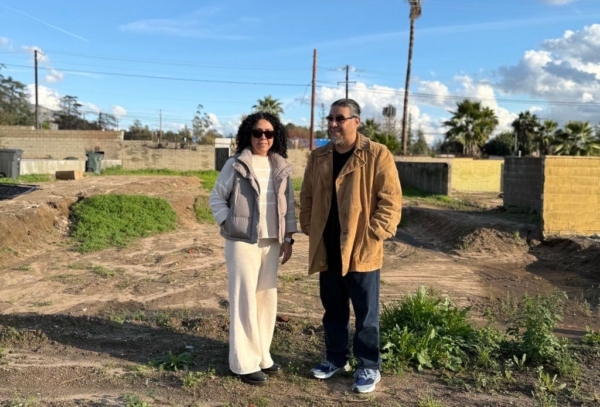
The couple has taken on approximately 18 client projects to date. One of those projects — a rebuild for a family of four — is set to break ground any day now. EquiBuild has promised to finish the project by the start of the 2026 school year, but internally, it has built a timeline that should have the home ready for occupancy in about six and a half months.
When it comes to the partners they’re tapping to carry out the actual building, EquiBuild is working almost exclusively with local stakeholders — many of whom are from Pasadena or have connections to the Altadena community.
“We’re not trying to build a thousand homes. What we’re trying to do is work deeply and effectively with those families we do work with,” Dominguez said.
Some challenges are beyond local control
As involved as the community has been in expediting and assisting the rebuild, challenges remain, some of which are at least partly due to the grassroots nature of the recovery effort.
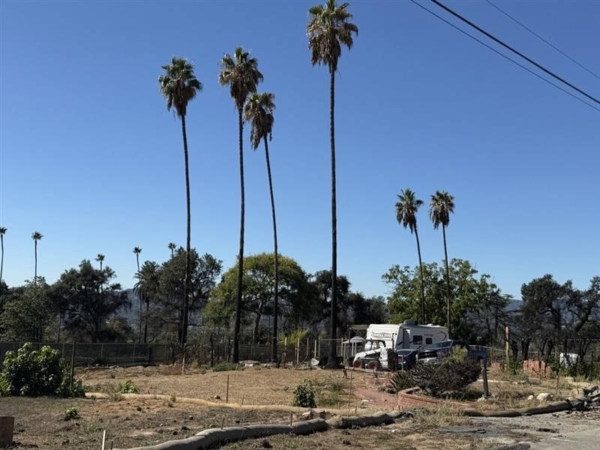
For one, Altadena is, at least for now, a construction zone. Once quaint residential streets are filled with the sounds of hammers, drills and construction trucks. Many lots are still empty, although RVs have started popping up on some streets. More than that, the commercial rebuild is an even slower process.
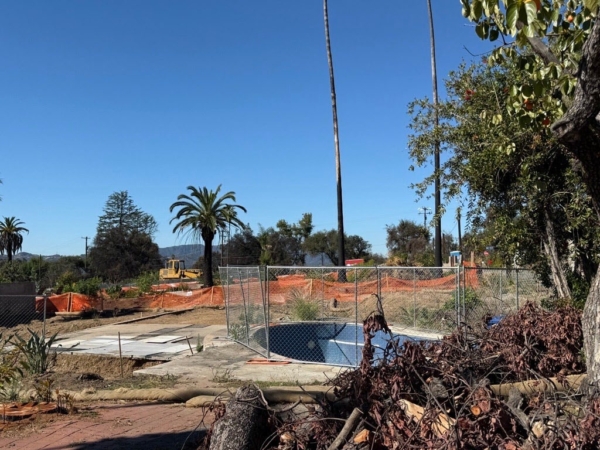
Though Mariposa Junction — a commercial corridor known for hosting small businesses — reopened in November, it’s just a fraction of what was once at the heart of the community. That’s raised questions for homeowners and residents, according to Gonzalez and Dominguez.
“It wasn’t just the house. It was the commercial corridors. It was all of the public spaces,” Dominguez said. “A lot of them burned down, and so there’s a fear of what Altadena is going to look like after the rebuild. I think part of that is that there are no plans yet.”
There’s also an ongoing gap in funding as residents battle insurance companies, mortgage lenders, utility companies and other headwinds. That has created a degree of uncertainty when it comes to rebuilding, especially as residents do the math on what’s possible for their budget.

However, there’s optimism that, moving into the new year, things will pick up as residents gain more clarity, according to Zandovskis, who noted that Genesis has already added more than 20 clients in recent weeks.
Perhaps the overarching concern, though, is overseeing a communal recovery effort while still managing personal trauma and healing.
As Ly from Rebuild Altadena put it, there’s going to be a time after the rebuild is completed when residents will again be in their homes, and that’s when they’ll have to reckon with the enormity of the fire.
“A lot of us have adrenaline,” he said. “But once it’s rebuilt, and we move back, a lot of us will have some psychological PTSD once this adrenaline is out of our bodies.”